Beyond Externalities: Why Harm Persists Even When We Know Our Lights Better
We know that artificial light causes ecological harm, disrupts human health, and reshapes how cities function at night. We also know that alternatives exist. Better design, better standards, better policies. And yet, despite decades of evidence, lighting levels continue to rise, expand, and intensify.
This pattern is not unique to lighting. It appears wherever harm is well documented but fails to meaningfully interrupt growth. The usual explanations focus on lack of awareness, weak regulation, or economic tradeoffs. These explanations are not wrong, but they are incomplete. They describe outcomes, not the mechanism that keeps those outcomes stable.
Introducing the PNC Loop
To understand why harm persists even when we know better, I find it useful to name a loop that often remains implicit. I call it the Profit - Normality - Cost loop, or PNC.
The PNC loop describes how systems grow by stabilizing harm rather than resolving it.
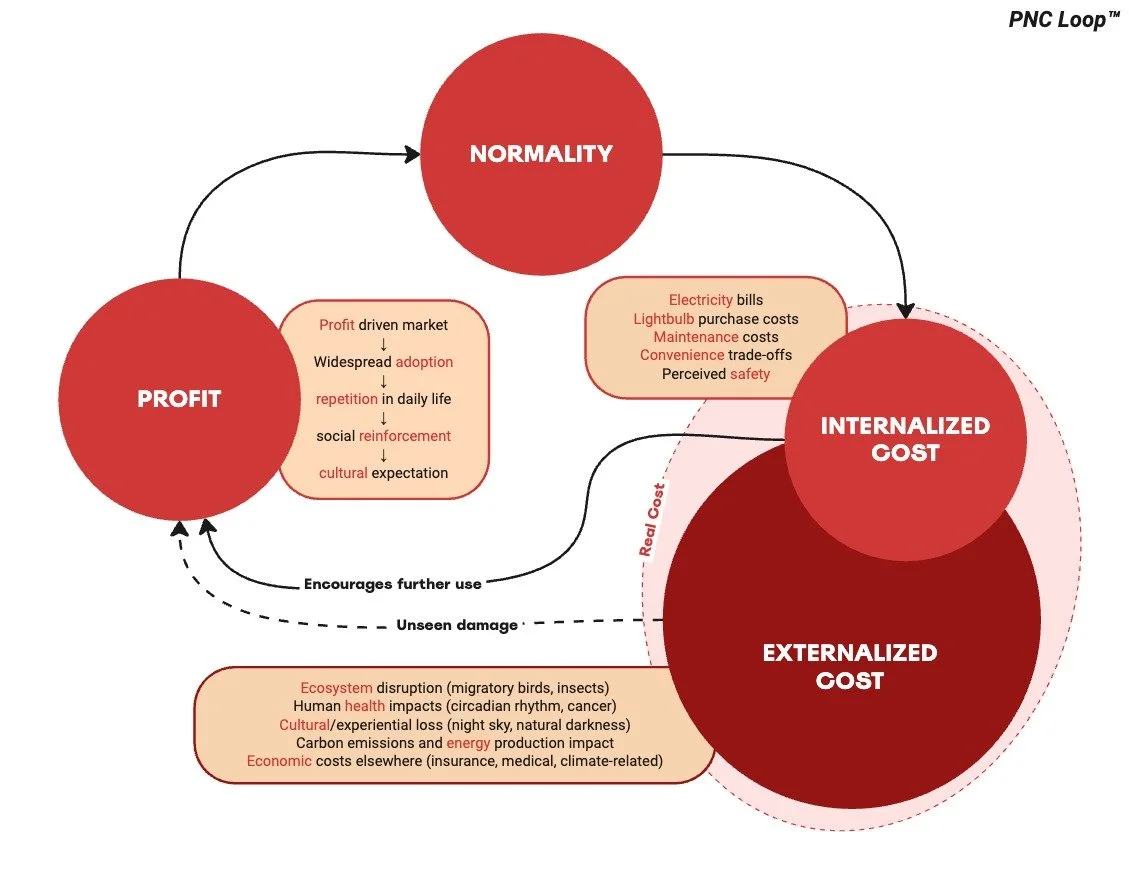
Figure 1. The PNC Loop in Artificial Lighting (PNC™ © 2026 Lightbahn).
This diagram illustrates how profit, normality, and cost interact to stabilize harm in artificial lighting systems.
The loop works like this.
Profit enables scale. Products, infrastructures, or services that generate profit spread quickly and become embedded in daily life. As they scale, they begin to define what feels normal.
Normality is not neutral. It shapes perception. Once something is normalized, it stops being questioned. It fades into the background. It becomes part of how the world is supposed to look, feel, and function.
Costs do not disappear in this process. Some costs are internalized, appearing in visible expenses or profit margins for the producers. Others are externalized, displaced across time, diffused across populations, or shifted onto ecosystems and bodies that have little visibility or voice. Because these externalized costs are not immediately felt at the point of use, they fail to register as costs at all, allowing the loop to continue largely unchecked.
Profit continues because normality absorbs discomfort, internalized costs are tolerated, and externalized costs fail to interrupt the loop.
This is not a moral argument. It is a structural one.
PNC vs Externalities
At first glance, this framework may resemble existing models, particularly the idea of externalities. In one sense, that resemblance is accurate. Externalities describe how markets fail to account for social and environmental costs. They ask where harm goes, who pays for it, and how it might be priced in.
The PNC loop asks a different question.
It asks how environments are designed so that harm never registers as harm in the first place.
Externalities focus on mispriced costs. PNC focuses on misperceived reality.
In the PNC loop, invisibility is not accidental. It is produced. Normality acts as a buffer between harm and perception. Once normality is established, even significant damage can feel inevitable, acceptable, or simply not worth contesting.
Why Artificial Lighting Reveals the Loop
Artificial light is ambient rather than transactional. Exposure is continuous and unavoidable. Harm is cumulative rather than acute. Most importantly, lighting trains perception passively. Brightness becomes associated with safety, progress, and care, while darkness becomes associated with risk, neglect, or failure. These associations are learned long before any conscious choice is made.
As a result, the real cost of excessive lighting is largely hidden by design. They appear as background conditions. Ecological disruption happens elsewhere. Health impacts accumulate slowly. Cultural loss is difficult to quantify. Meanwhile, brightness itself comes to feel like the baseline for functioning cities.
Once that baseline is established, reducing light feels like loss, even when it is improvement.
Upstream Intervention
Data alone struggles to change practice because the loop is already stabilized at the level of normality. Even well-intentioned interventions, such as efficiency programs or awareness campaigns, can face systemic resistance, changing practices that have been entrenched over generations takes time. The value of the PNC framework is not that it replaces existing models, but to highlight why interventions often arrive after harmful practices have already become normalized and self-sustaining.
If harm is stabilized through normality, then pricing mechanisms, efficiency improvements, and awareness campaigns will always face resistance. They challenge not just behavior, but the background conditions that define what feels acceptable.
The PNC framework shifts attention upstream. It highlights intervention points that are often overlooked, including design standards, visual thresholds, cultural expectations of safety and success, and the norms we collectively accept. From a design thinking perspective, this emphasizes understanding user perception and context. Excessive lighting persists not just because of profit, but because people are trained to perceive brightness as the baseline for safety and success. By mapping these perceptions, we can design interventions that guide behavior naturally rather than relying solely on awareness campaigns or efficiency measures. In UX industry terms, it is about reframing the problem space so the system itself supports better outcomes.
The PNC Loop as a Guiding Lens
I am publishing this framework here so it can be referenced, tested, and challenged. I will use it explicitly in future writing, not as an answer, but as a lens. My hope is that naming this loop makes it harder to ignore, and easier to interrupt.
Originally published on Substack. This version is republished here as part of the Lightbahn archive.